Titchfield Abbey and Village Guide: Free Entry, History
Titchfield Abbey is free to enter, according to English Heritage, and sits in a village with a Saxon-origin church, a historic square and an early canal.
Titchfield Abbey (Mill Lane, PO15 5RA) is free to enter according to English Heritage, open daily 10am to 4pm October to March and 10am to 5pm April to September, with £2 parking for non-members. Founded 1231/2 for Premonstratensian canons, it became Place House after 1537. Check the official page before travelling.
What is Titchfield Abbey?
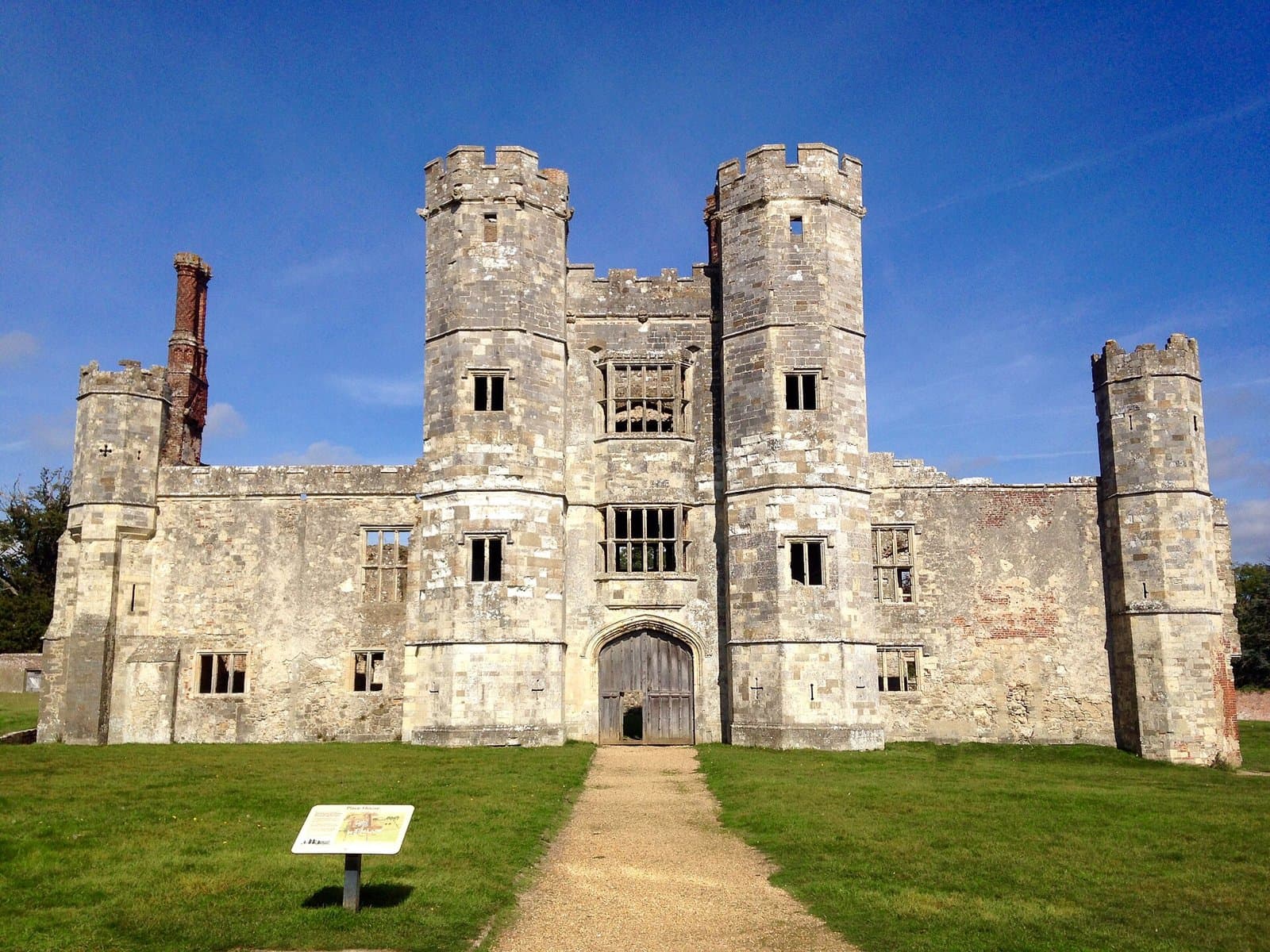
Titchfield Abbey is a ruined medieval abbey and Tudor mansion in the village of Titchfield. It is in the care of English Heritage, and its address is Mill Lane, Titchfield, Hampshire, PO15 5RA. The most striking feature, according to the English Heritage visitor page, is a grand turreted gatehouse, built across the nave of the former abbey church.
Is Titchfield Abbey free to visit?
Yes, according to English Heritage, which lists admission to Titchfield Abbey as free. English Heritage's page showed this on 5 October 2026. English Heritage also gives the opening hours as daily, 10am to 4pm from October to March and 10am to 5pm from April to September, so the winter hours apply now. Hours can change, and the English Heritage prices and opening times page is where to check them for your date. If you need help, English Heritage lists a customer line on 0370 333 1181.
Parking and access at Titchfield Abbey
English Heritage says there is a small car park at the site, reached by a track through a narrow gate in the high walls surrounding the abbey. Parking is £2 for non-members, payable by text or online in advance, and free for members with a valid English Heritage car sticker on display. If you are heading for the square or the church instead, look for parking signs on arrival, and see our town centre parking guide for the general picture in Fareham.
On access, English Heritage warns that the site has uneven surfaces and steep stairs. Dogs on leads are welcome.
The history of Titchfield Abbey
English Heritage's history page says the abbey was founded in 1231 or 1232 by Peter des Roches, Bishop of Winchester, for Premonstratensian canons, an order founded at Prémontré in France and known as the white canons.
After the Suppression of the Monasteries, Henry VIII gave the abbey to Thomas Wriothesley, later the 1st Earl of Southampton, in 1537. English Heritage says he converted it into a grand Tudor mansion called Place House, reusing monastic buildings and adding the large gatehouse across the former church nave. It also says Wriothesley controlled 11 manors and 5,000 acres around the property, and that visitors to Place House included Edward VI, Elizabeth I and Charles I.
English Heritage notes a suggested Shakespeare connection: Henry, the 3rd Earl of Southampton and Wriothesley's grandson, was a patron of Shakespeare, and the page says some of Shakespeare's plays were performed at Place House for the first time. The page presents this as a connection rather than a proven fact, so treat it as local tradition. After the 4th Earl's death the property changed hands several times until 1781, when most of the buildings were demolished for stone. Early twentieth-century archaeological work later revealed the monastic layout.
St Peter's Church, Titchfield
St Peter's is the village parish church and is notable for its age. Fareham Borough Council's Titchfield page says St Peter's has great historic interest as it contains substantial remains of the original church built in the seventh century, along with an elaborate Norman doorway, a fourteenth-century chapel and a north aisle. The church's own history page dates the oldest sections to the Anglo-Saxon period, in the seventh to eighth century, and says the south aisle and an elaborate porch doorway were added in the twelfth century. It also records that Titchfield Abbey was founded in 1231, which fits English Heritage's account above. The church remains active, so check its website for visiting times before making a special journey.
The village square and Titchfield Canal
Fareham Borough Council describes Titchfield as a conservation area with a large square, around which shops, inns and houses with many historic buildings are grouped. The council's page says Titchfield Canal is believed to be the second oldest canal in England, completed in 1611, and lies close to Titchfield Haven, hidden by a bridge with the remains of a sea-lock at the south end. For the coast at the end of that canal, see our Hill Head beach and Titchfield Haven guide.
The Titchfield tithe barn
Wikipedia's Titchfield article describes the Titchfield Tithe Barn, also known as Titchfield Abbey Barn, as an aisled barn whose timbers date to 1408 to 1409. It stands near the abbey ruins. For buses and getting around, see our Fareham buses guide and things to do page. By car, English Heritage gives the abbey's address as Mill Lane, Titchfield, PO15 5RA.
Share this article